Blog

  • I Breastfed for 2 Years. Here’s the Honest Truth About All of It.

    I Breastfed for 2 Years. Here’s the Honest Truth About All of It.

    ⚠️ Affiliate Disclosure: This post contains affiliate links. If you buy through my links I may earn a small commission at no extra cost to you. I only recommend things I have personally used or carefully researched for fellow moms.

    I want to start by saying something I didn’t hear enough when I was in the thick of it:

    Breastfeeding is hard. Like, really hard. And if you’re struggling right now, you are not doing it wrong. You are just in the hard part.

    I breastfed my daughter for two full years. I weaned her just recently — in three days, which honestly felt like its own kind of miracle and its own kind of heartbreak at the same time. (I’ll write a whole separate post on weaning soon because that chapter deserves its own space.)

    But today I want to go back to the beginning. To the raw nipples and the 2am crying — mine, not always hers. To the moment I almost quit at week three. And to how I got through it and came out the other side feeling like I had done something extraordinary.

    Here is everything — the real stuff, not the highlight reel.

    The First Four Weeks: Honestly the Hardest Thing I’ve Done

    Nobody warned me that the first latch would feel like that. I genuinely gasped the first few times. My nipples were raw, cracked, and so sore that I would tense up the moment my daughter started rooting.

    My milk supply was all over the place those first weeks. Some feeds felt fine, some she came off screaming like she hadn’t gotten anything. I was constantly wondering if she was getting enough, checking her diapers obsessively, Googling at midnight.

    What actually turned things around for me was getting a lactation consultation. I cannot stress this enough — if you are struggling, please don’t wait as long as I did to ask for professional help. A good International Board Certified Lactation Consultant will assess your latch, check for tongue tie, and help you figure out your supply situation in a way that no YouTube video or well-meaning family member can. You can find a certified consultant near you through ILCA — the International Lactation Consultant Association. It was one of the best things I did for both of us.

    In the meantime, these are what got me through those early weeks physically:

    • Silverettes: I cannot overstate how much these helped. Silverette Silver Nursing Cups sit over your nipples between feeds and the silver genuinely seemed to have healing properties — not just marketing fluff.
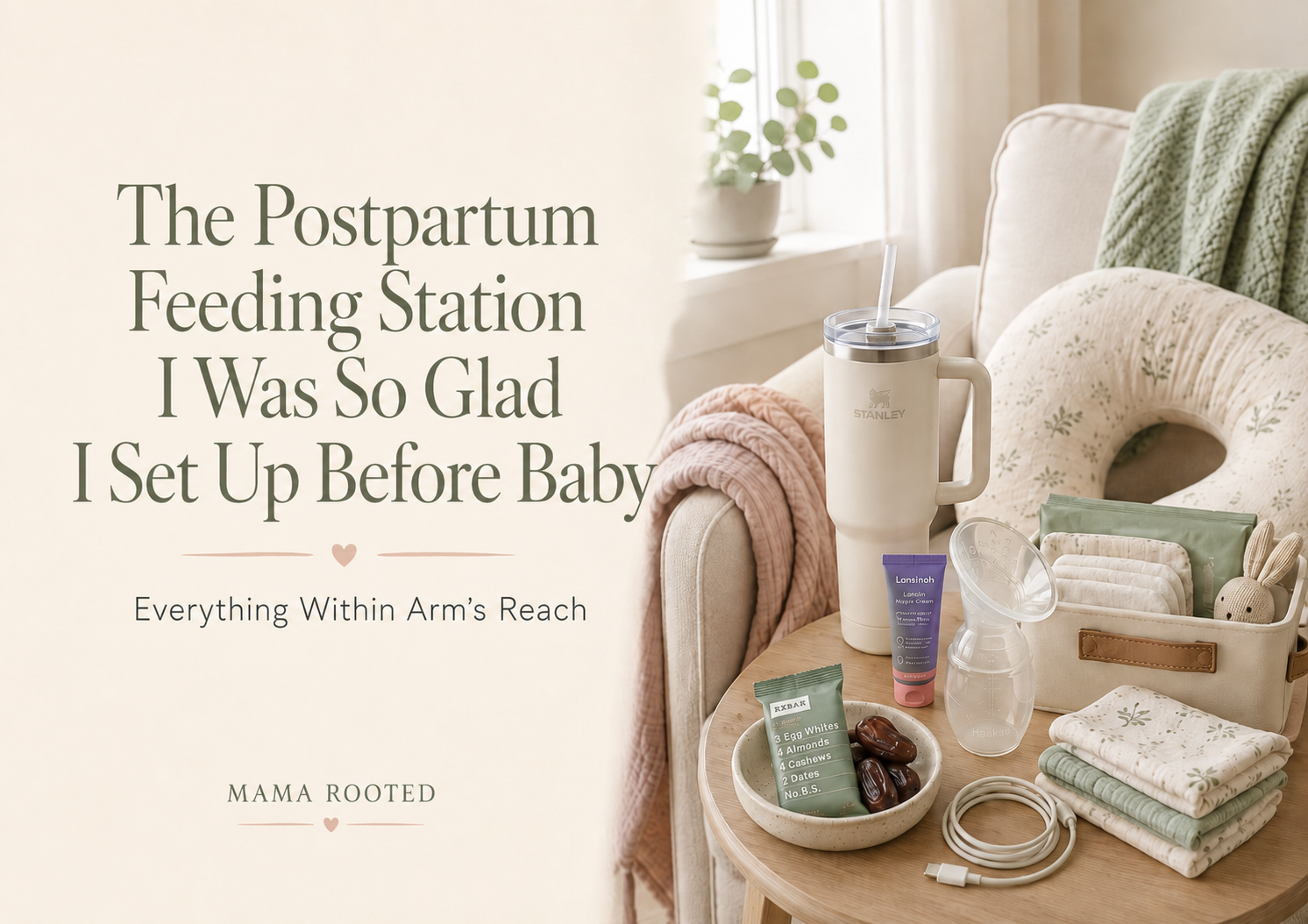
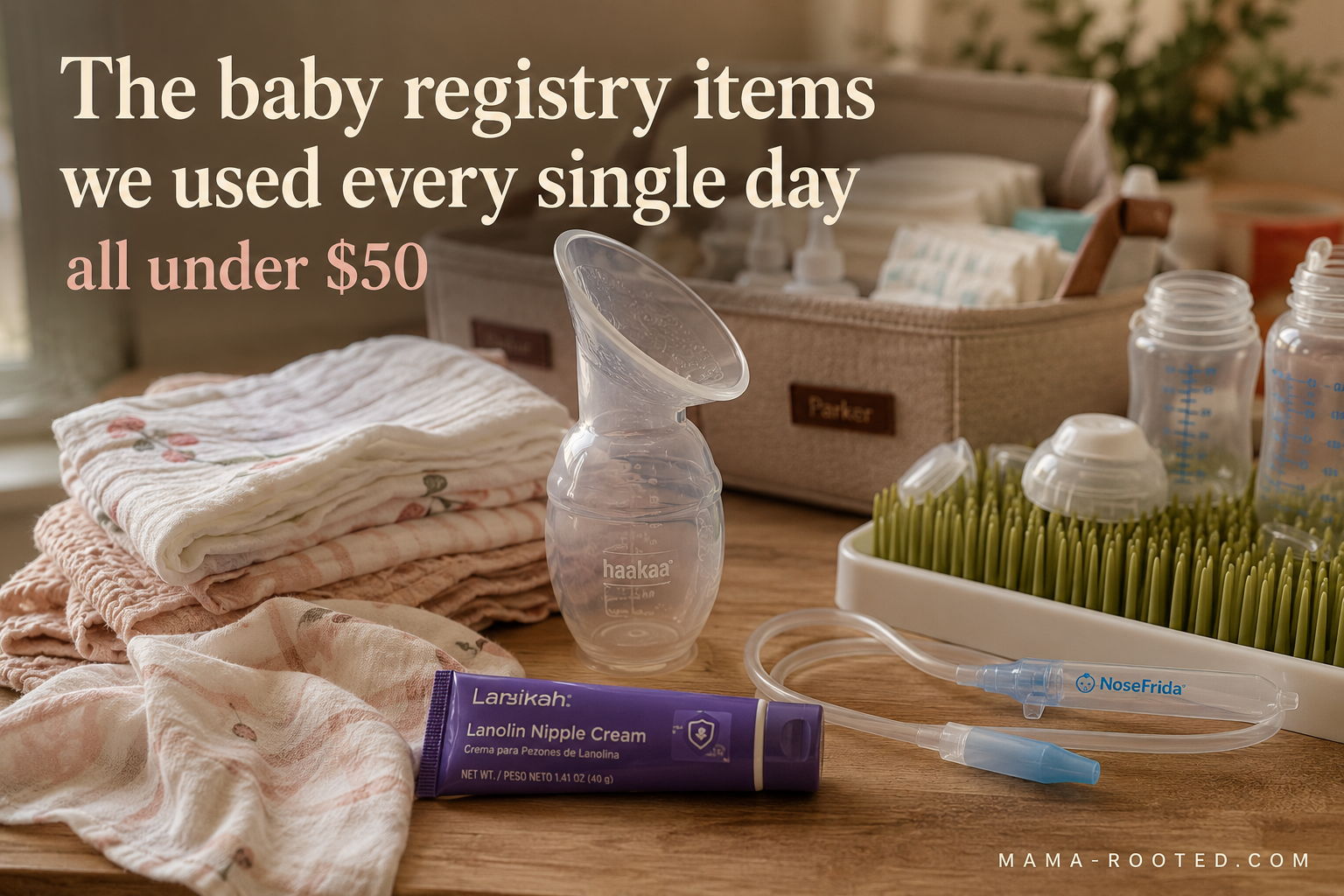
    • Nipple Cream: I went through almost two tubes of Lansinoh HPA Lanolin Nipple Cream in the first month alone. Apply after every single feed. Don’t skip it.
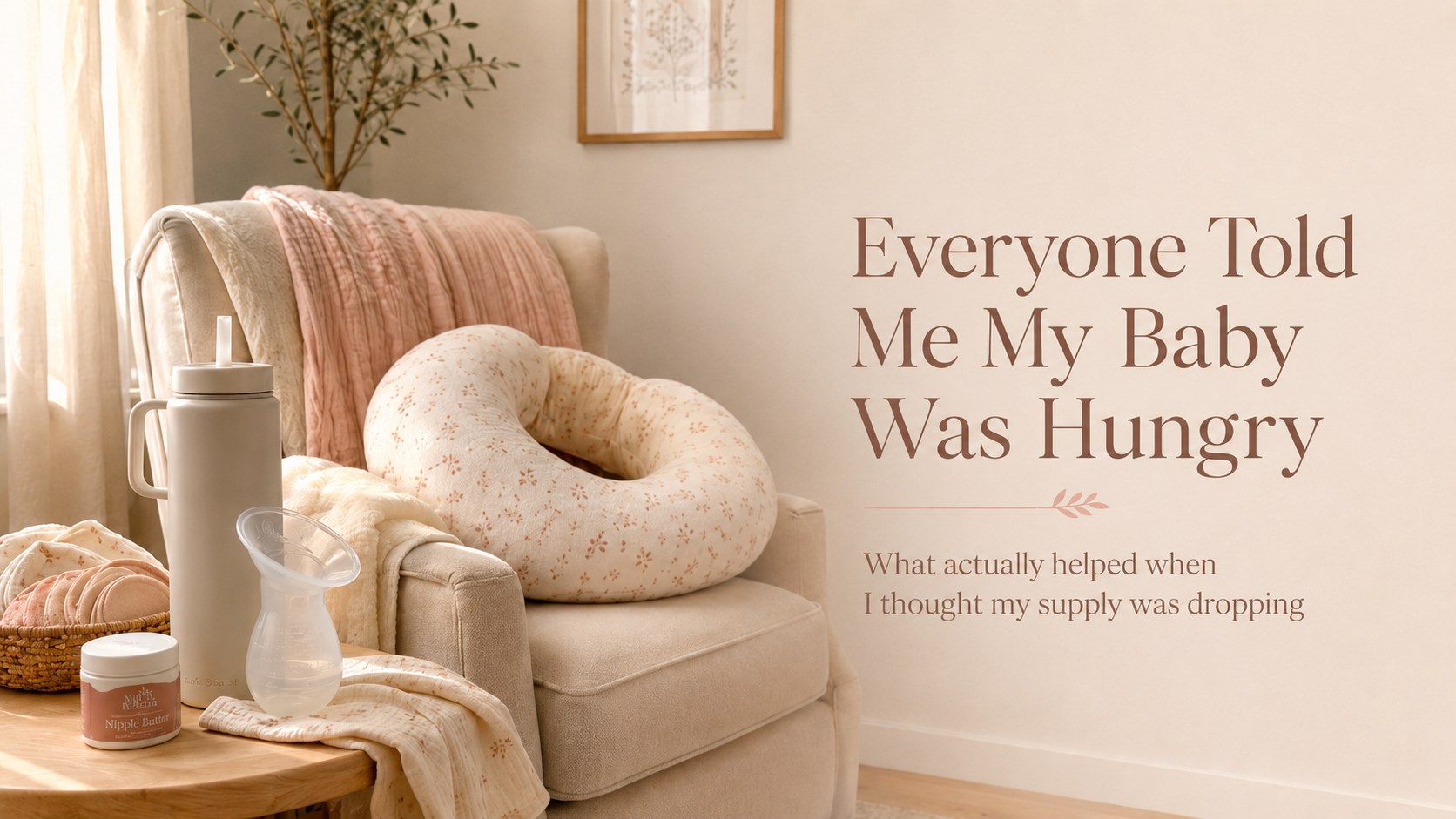
    • Nursing Pillow: The Boppy Original Nursing Pillow saved my back and helped me get a better latch position. When you’re feeding every 2 hours, your arms and shoulders take a beating without support.
    • Nipple Shield: My lactation consultant suggested trying a Medela Contact Nipple Shield during the rockiest first weeks. It gave my skin a tiny break while she still fed. Not a forever solution but a bridge when you need one.

    The Complicated Relationship I Had With Pumping: My Medela Was My Best Friend and Worst Enemy

    I pumped from around week three — partly to build a small freezer stash, partly because there were times my daughter wouldn’t latch and I didn’t want to miss a feed.

    I used the Medela Pump In Style and it was solid. Hospital-grade suction, double electric, and it came with everything I needed to get started. It’s FSA/HSA eligible too which is worth knowing if you have a flex spending account through work.

    A few things that made pumping more manageable:

    Bottles: Because Even Exclusively Breastfed Babies Sometimes Need One

    Even though I was exclusively breastfeeding, there were times — a rare night out, a doctor’s appointment — where my husband or mom would give a bottle of pumped milk. Introducing a bottle too early can cause nipple confusion so I waited until around 6 weeks.

    We used Dr. Brown’s Natural Flow Anti-Colic Bottles as they were one of the most recommended by lactation consultants specifically for breastfed babies because the slow flow nipple prevents them from getting lazy at the breast. I have also heard great reviews from friends of mine about this Comotomo Natural Feel Baby Bottle — the squishy silicone body is designed to feel more like a breast.

    Cluster Feeding: The Phase I Was Not Remotely Prepared For

    Nobody told me about cluster feeding before it happened and when it did I genuinely thought something was wrong.

    Cluster feeding is when your baby wants to nurse constantly — like every 30-45 minutes. It’s their way of telling your body to make more milk. It’s completely normal. It also feels completely insane when you’re living through it.

    During cluster feeding phases I kept:

    • Nipple cream on the nightstand — applied after every single feed, no matter how tired I was
    • Earth Mama Organic Nipple Butter — I alternated this with the Lansinoh. The Earth Mama one is a little thicker and more soothing for really raw days.
    • Kindred Bravely Nursing Tank — easy access around the clock, comfortable enough to sleep in, and made me feel slightly more human than a hospital gown
    • A giant water bottle. Hydro Flask 32oz Wide Mouth — breastfeeding makes you thirsty in a way that is hard to describe. I kept this next to me at all times.

    The 2am Feeds: Real Talk

    My daughter did not sleep through the night before she was one year old. Not once.

    We were up every two hours for months. There were nights I cried right along with her, sitting in the dark, absolutely exhausted, wondering how people did this. There were nights I genuinely questioned everything.

    And then there were the other nights. The ones where she would fall asleep on my chest mid-feed and her little hand would be curled around my finger and the whole house was quiet and I just sat there not wanting to move.

    Both things were true at the same time. That’s what nobody prepares you for. It’s hard and it’s sacred at the same time.

    A few things that made night feeds survivable:

    Keeping Up My Milk Supply: What Actually Helped

    Supply anxiety is real and I had it bad in the early months. A few things I genuinely believe helped me maintain supply for two years:

    • Legendairy Milk Liquid Gold Capsules —Really clean ingredients. I used these from month two onward.
    • Milkmakers Lactation Cookie Bites — oats, brewer’s yeast, flaxseed. I had two every afternoon. Also just a nice excuse for a snack.
    • Oatmeal every single morning. Nothing fancy, just regular rolled oats. Boring but it works.
    • Staying hydrated — truly, genuinely, aggressively hydrated. I aimed for 100oz of water a day while nursing.
    • Not skipping feeds or pumping sessions, especially in the early months. Your supply is supply and demand — the more consistently you feed, the more your body makes.
    • Ensuring I get good balance of fats from my meals for an adequate calorie intake.

    Two Years Later: What I Want You to Know

    I weaned my daughter at two years. Three days. She was ready and so was I and it was peaceful and a little sad and mostly just felt right.

    Looking back at the whole journey — the cracked nipples, the cluster feeding marathons, the nights I cried in the dark — I would do all of it exactly the same way again.

    Not because it was easy. It wasn’t.

    Because it was ours. This quiet, exhausting, tender thing that happened between me and my daughter every few hours for two years. That is a chapter I will carry with me forever.

    If you’re in week one right now, barely holding on — hang in there. Get a lactation consultant. Use the Silverettes. Ask your partner to bring you water. It does get easier.

    And if you decide breastfeeding isn’t for you, or your body has other plans — that is okay too. A fed baby and a mentally healthy mama beats everything.

    📌 Save this post for the mamas in your life who are about to start their feeding journey. And if you’re in the thick of it right now — I see you. You’re doing great.

    Coming soon on Mama Rooted: How I weaned my 2-year-old in 3 days — gently, peacefully, and without tears (mostly). Stay tuned.

    Everything Mentioned in This Post

    If you’re building your own breastfeeding survival cart right now, these are the products I personally kept within arm’s reach every day. All Amazon links are affiliate links.

  • My Honest Postpartum Recovery Must-Haves: What Actually Helped Me Heal

    My Honest Postpartum Recovery Must-Haves: What Actually Helped Me Heal

    ⚠️ Affiliate Disclosure: This post contains affiliate links. If you purchase through my links, I may earn a small commission at no extra cost to you. I only ever recommend products I have personally used or thoroughly researched

    I come from a big, loud, wonderful family. The kind where someone is always dropping off food, offering to hold the baby, or just sitting with you on the couch because they could tell you needed company. I was lucky — and I knew it.

    But even surrounded by all that love, the weeks after I gave birth were some of the loneliest I have ever felt.

    Nobody tells you that postpartum can feel like that. You imagine it will be overwhelming in a beautiful way — all tiny onesies and newborn smell and visitors bringing casseroles. And parts of it are. But there is also this other thing that creeps in quietly. A fog. A distance. A feeling that everyone around you is living in full color and you are watching from behind glass.

    I had baby blues, hard. And it took me longer than I would like to admit to ask for help.

    Before I get into what helped me recover — physically and emotionally — let me back up a little.

    The Pregnancy Chapter: Prenatal Yoga Changed Everything

    I took prenatal yoga seriously from my second trimester, but especially in my last trimester. Every single day, no excuses. My body ached, I was exhausted, and sometimes I genuinely did not want to do it. But I always felt better after.

    I believe — and my body confirmed — that those classes helped me achieve the vaginal birth I had hoped for. The breathing techniques, the hip openers, the way the practice taught me to stay present through discomfort, it all showed up in the delivery room. If you are pregnant right now, I cannot recommend this enough.

    A good mat makes a real difference in late pregnancy when your joints need extra cushion. I used the Manduka PRO Yoga Mat and it is still my go-to.

    Coming Home: The Physical Recovery Essentials

    Whether you have a vaginal birth or a C-section, your body has just done something extraordinary. It needs support, not pushing through.

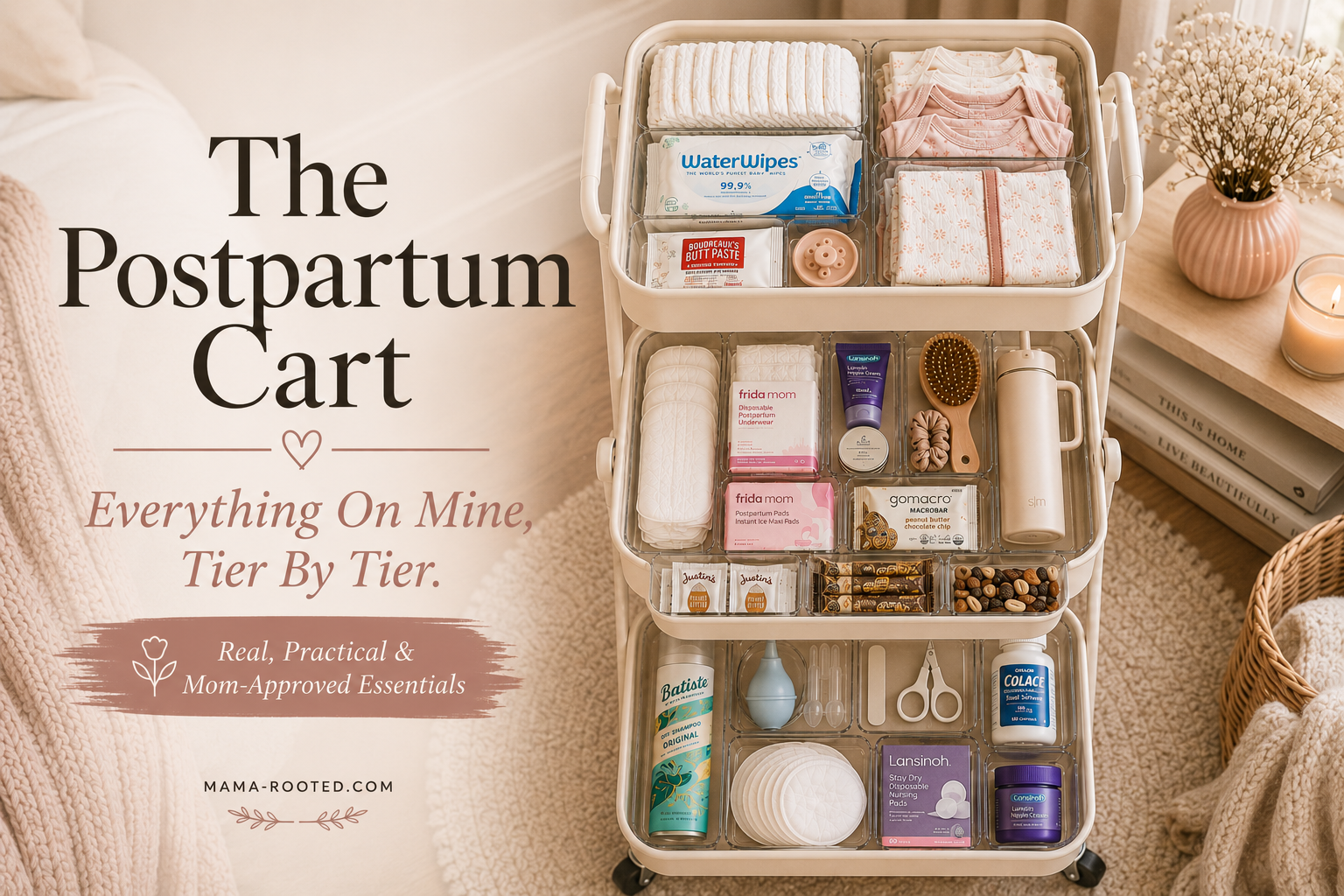
    Here is exactly what I had in my recovery basket and used EVERY SINGLE DAY:

    • Peri Bottle: The hospital gives you one, but it is not enough. The Frida Mom Upside Down Peri Bottle has an angled design that actually reaches where you need it. Game changer.
    • Padsicles: I made a batch before my due date and stored them in the freezer. Combine Frida Mom Instant Ice Maxi Pads with aloe vera and witch hazel. The relief is immediate.
    • Sitz Bath: The Lansinoh Sitz Bath Soak with Epsom salts was a daily ritual for my first two weeks. 15 minutes of warmth did more for me than anything else.
    • Stool Softener: No one wants to talk about this but I am going to. The first postpartum bowel movement is terrifying. Colace Stool Softener starting from day one is not optional — it is essential.
    • Postpartum Belly Wrap: I used the Belly Bandit B.F.F. Postpartum Wrap for core support and it genuinely helped my back pain in those first weeks.
    • Nipple Cream: Whether you are breastfeeding or not, Lansinoh Lanolin Nipple Cream is a must. It is also great for baby’s dry skin and chapped lips in a pinch.

    The Part I Did Not Expect: Baby Blues and Learning to Ask for Help

    Here is the honest truth I wish someone had told me: you can be surrounded by people who love you and still feel desperately alone after having a baby.

    I had family around constantly. My mom was there. My sisters came. My husband was on leave. And yet I cried in the shower every morning for two weeks. I felt detached from my own baby at moments, and the guilt from that was crushing.

    What changed things was one conversation. A real one. Not a “I’m fine, just tired” conversation — a real one. I told my husband I was not okay. That I needed him to see it, not just help with logistics but actually be present with me emotionally. It was one of the hardest things I have asked for in my life, and the relief when he heard me was immediate.

    Then I extended that same honesty to my mom, to my best friend, to my sister. Asking for help sooner would have saved me weeks of unnecessary suffering. Please hear me on this: asking for help is not weakness. It is the most radical act of self-care you can do for yourself and your baby.

    If you are in that fog right now, a few things that helped me emotionally:

    Postpartum Nutrition: What I Actually Ate to Heal Faster

    Your body is healing from the inside out. What you eat matters. I was not perfect at this — there were plenty of granola bar dinners — but the things that genuinely supported my recovery:

    One Thing I Wish I Had Done Sooner: Pelvic Floor PT

    I waited four months to see a pelvic floor physical therapist. I wish I had gone at six weeks.

    Leaking when you sneeze, lower back pain, pressure “down there” — these are not things you just have to live with after having a baby. They are signs your pelvic floor needs rehabilitation. A women’s health PT can assess you properly and give you a personalized recovery plan.

    A Note to the Mom Reading This at 2am

    If you found this post in the middle of a hard night, I want you to know something: what you are feeling is real, it is valid, and it will not always feel this heavy.

    Ask for help earlier than I did. Tell the people around you specifically what you need — not just “help” but “I need you to take the baby for two hours so I can sleep” or “I need you to sit with me and not try to fix anything.” Be that specific. It works.

    Your recovery is not a sprint. Root yourself in patience, in community, and in small daily acts of care for yourself.

    — With Love, Mama Rooted.

    📌 Save this post for later — and share it with a mama who needs it.

    Quick Recap

    Top things I could not survive postpartum without. If you are building your own recovery basket, you could definitely check these out!