Affiliate disclosure: This post contains affiliate links. I may earn a small commission at no extra cost to you. I only recommend products I believe are genuinely useful for fellow moms.
The first few times I left the house with a breastfed baby, feeding felt like the thing I had to plan the entire outing around.
Where would I feed?
What if she got hungry?
What if I needed to pump?
Where would I keep the milk?
What if there wasn’t a fridge?
What if I forgot something?
Eventually I realised I didn’t need to carry my entire feeding station with me.
I just needed a few things that solved the problems that actually came up.
Because breastfeeding outside the house is usually pretty simple once you’ve figured out your system.
Here’s what I actually found useful.
For the pumping mama
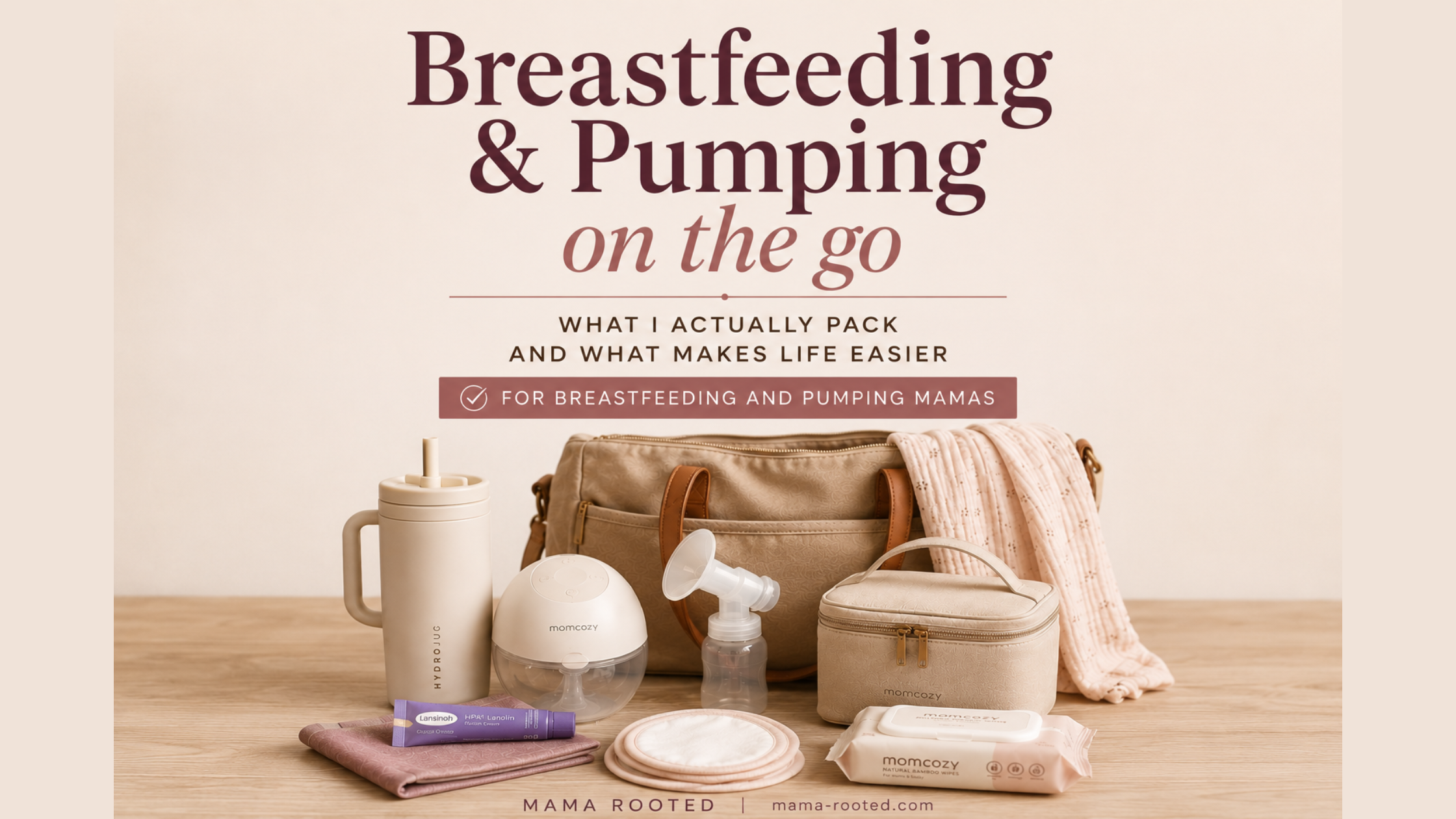
Momcozy M5 Wearable Breast Pump
If you’re pumping on the go, a wearable pump can make the whole process feel dramatically less complicated.
The M5 sits in your bra without tubes or a power cord, so you can pump without finding an outlet or setting up a traditional pump. Momcozy lists the M5 as a hands-free, cord-free wearable pump with multiple modes and suction levels.
I’ve used mine in an airport terminal, in the back of a car and in a café.
The biggest benefit wasn’t that I could suddenly do everything while pumping.
It was that pumping didn’t automatically mean stopping everything else.
Charge it before you leave. Make sure the parts are clean and dry. Put it somewhere you can reach easily.
That’s it.
Momcozy Portable Breast Milk Cooler

This is the product that made longer days out much less stressful for me.
Before having a dedicated milk cooler, every outing involved the mental maths:
When did I pump? Where’s the fridge? How long are we going to be out?
The Momcozy 22oz cooler is designed to hold two 11oz bottles and keep milk chilled for 24+ hours when the cooling tube is fully frozen and the cooler stays closed.
That doesn’t mean you can ignore normal breast milk storage guidance. The CDC says expressed milk can be transported in an insulated cooler with frozen ice packs for up to 24 hours while travelling, and it should be refrigerated or frozen once you reach your destination.
For me, though, the biggest benefit wasn’t the number of hours.
It was not having to spend the entire outing looking for a fridge.
Bottles or milk storage containers
If you’re pumping while you’re out, you’ll need somewhere to put the milk.
That might mean breast milk storage bags, storage bottles or the bottles you’ll eventually feed the baby from.
I wouldn’t overcomplicate this.
For a short outing, bring enough storage for what you’re realistically expecting to pump.
If you’re pumping specifically so baby can have expressed milk while you’re away, remember that you’ll also need a clean feeding bottle.
The goal is simply to keep the milk contained, cold and easy to access.
Clean spare pump parts
This is one of those things that sounds excessive until you’re sitting somewhere with milk-covered pump parts and no sink.
For shorter outings, I often prefer carrying a clean spare set of pump parts rather than trying to wash everything immediately.
Pump.
Swap the parts.
Store the used ones safely.
Deal with the washing when you’re somewhere that actually has a proper setup.
For me, this was often easier than turning a café bathroom into a makeshift pump-cleaning station.
And if you’re going to be out for a full day, a spare set gives you a lot more flexibility.
Portable pump-parts washing kit

For longer days, work days and travel, a small washing kit can be worth the space.
Think:
- Small pump-parts brush
- Travel-size dish soap
- Small clean container or wash basin
- Clean drying supplies
You don’t need to bring this for every coffee run.
But if you’re going to be pumping multiple times away from home, having a way to properly wash your parts becomes much more useful.
My general rule:
Short outing: clean spare parts.
Long day: washing kit or spare parts, depending on what makes more sense.
Back home: wash everything properly.
That feels much more realistic than pretending one wipe has magically cleaned an entire pump.
Pump wipes + pump wash
I keep pump wipes in the outer pocket of the bag for exactly those moments when I’m away from a proper washing setup.
They’re convenient.
They’re quick.
And they’re absolutely not a replacement for properly washing pump parts.
That’s the distinction I wish more packing lists made.
Wipes are for getting through the outing.
They’re not permission to skip proper cleaning indefinitely.
So my system is:
Short outing: wipes can help you get through the outing.
Long day: bring clean spare parts or a washing kit.
Back home: wash everything properly.
Portable bottle warmer — if you actually need one
A portable warmer is useful if your baby strongly prefers warm expressed milk and you’re going to be away from somewhere that can safely warm a bottle.
But here’s the thing I wish someone had told me earlier:
You may not need one.
Breast milk doesn’t have to be warm. Expressed milk can be served cold, at room temperature or warm.
So if your baby happily drinks cold or room-temperature milk, that’s one less thing to carry.
Mine preferred hers warm, so this made travel days much, much easier.
Cleaning and sanitizing for longer trips
Microwave steam bags
These aren’t something I would automatically throw into the bag for a coffee run.
They’re much more useful for:
- hotel stays
- work trips
- overnight travel
- longer days where you have access to a microwave
Steam bags can be useful for sanitizing or steam-cleaning pump parts after they’ve been properly washed. The CDC includes microwave steam as one option for sanitizing feeding items, following the manufacturer’s instructions.
So think:
clean first, steam when appropriate.
For the breastfeeding mama
Nipple cream
This lives in my outer pocket rather than buried somewhere in the bag.
If you’re prone to soreness or irritation, having nipple cream immediately available can make a long day out much more comfortable.
I especially liked having a small tube with me because the moment you discover you need it is usually not the moment you want to start digging through a full changing bag.
Disposable nursing pads
Pack more than you think you’ll need, particularly during the early months when leaking can be unpredictable.
A baby crying nearby.
Hearing another baby feed.
Going longer between feeds.
Sometimes your body simply decides it has its own schedule.
You don’t need six pads because I said six pads.
Pack enough that a leaking top doesn’t become the emergency of the afternoon.
Nursing cover — if you want one
Entirely optional.
Some mamas are completely comfortable feeding in public without one. Some prefer having a little extra coverage.
Both are fine.
And if you do use one, this lightweight muslin one is breathable and comfortable for both mamas and babies.
A large water bottle with a straw
This one gets its own section because breastfeeding thirst is a different category of thirst.
It arrives suddenly, completely, and usually at the exact moment your baby is latched and you cannot get up.
The bottle needs to be:
- Large enough to last through the outing
- Easy to reach with one hand
- Easy to drink from without unscrewing a lid
The HydroJug Traveller is the one I kept in the changing bag.
It holds plenty, stays cold and has a built-in straw, which meant I could actually drink while feeding rather than discovering two hours later that I had barely had any water.
One-handed snacks
Feeding a baby burns calories.
Pumping burns calories.
Doing either while navigating a café, airport or train with a baby burns whatever patience you had left.
Keep two genuinely easy snacks in the outer pocket of the bag.
Not because they’re a cute “mama essential.”
Because eventually you’re going to be starving while your baby is latched and your water bottle is on the other side of the room.
Anything you can eat with one hand is fair game.
Protein bars. Trail mix. Nuts. Whatever you’ll actually eat.
Hand sanitiser
Keep it somewhere you can reach easily.
Soap and water are best when they’re available. If they aren’t, the CDC recommends an alcohol-based hand sanitizer containing at least 60% alcohol.
This is particularly useful before handling bottles, pump parts or feeding supplies.
And if your hands are visibly dirty, find soap and water when you can.
The actual quick-packing checklist
This is the part I’d screenshot.
If you’re breastfeeding
- Nipple cream, if you use it
- Nursing pads
- Muslin or nursing cover, if you use one
- Large water bottle with straw
- One-handed snack
If you’re pumping
Everything above plus –
- Charged wearable pump
- Clean bottles for expressed milk
- Milk storage bags or containers
- Cooler + frozen cooling element
- Clean spare pump parts
- Pump wipes for when you’re away from a sink
- Pump-parts washing kit for longer outings
For everyone
- Hand sanitiser
- One extra muslin/burp cloth
- One-handed snack
For a full day or travel day
This is where I would add the extras:
- Portable pump-parts washing kit
- Travel dish soap
- Extra clean pump parts
- Microwave steam bags if you’ll have access to a microwave
- Portable bottle warmer if your baby needs warm expressed milk
- Extra milk storage bags/containers
- Extra nursing pads
- Extra snacks
You don’t need all of these for every outing.
That’s the whole point.
What I wouldn’t automatically pack
You don’t need to turn the changing bag into a mobile feeding station.
For a short outing, I wouldn’t automatically bring:
- A bottle warmer
- Steam bags
- A full washing kit
- Multiple backup bottles
- Every pump accessory you own
- A dedicated nursing cover if you don’t use one
If you’re breastfeeding and not pumping, you may need surprisingly little.
If you’re pumping, a clean spare set of pump parts may be more useful than a full washing setup for a shorter outing.
Pack for the outing you’re actually taking — not the hypothetical disaster you’re imagining.
That one rule has saved me from carrying an absurd amount of stuff.
The first time you leave the house with everything packed…
The first time you leave the house with a baby, feeding can feel like the thing you have to plan the entire outing around.
It doesn’t have to.
The goal isn’t to carry everything.
It’s to know what your baby needs, put those things somewhere you can actually reach them, and leave the house without wondering whether you’ve forgotten something important.
Because the outing itself might still be chaotic.
The baby might still cry in the café.
You might still end up eating your lunch one-handed.
You might still forget your own coffee entirely.
But at least you won’t be standing there thinking:
“Where am I supposed to find a fridge?”
That’s the whole point of this list.
Not perfection. Just one less thing to worry about when you’re already carrying quite enough.
📌 Save this before your first real day out.
And send it to the new mama who’s currently trying to fit her entire feeding station into a changing bag.
Lots of love,
Mama Rooted
Also on Mama Rooted
I tested the Momcozy M5 for a month — the honest wearable pump review
The postpartum feeding station — how to set up both the day and night station before baby arrives
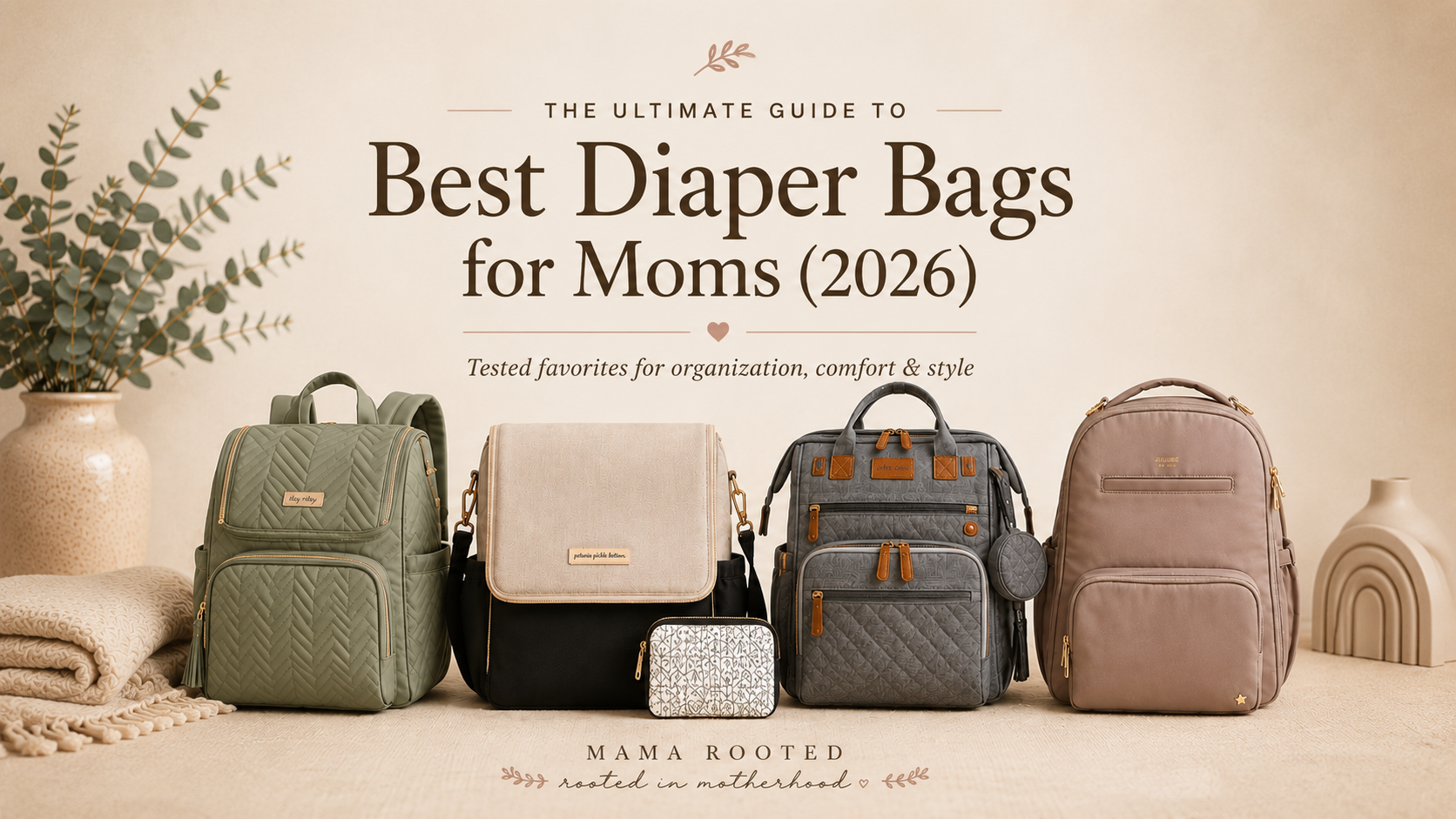
What actually goes in the diaper bag — and what you can leave at home